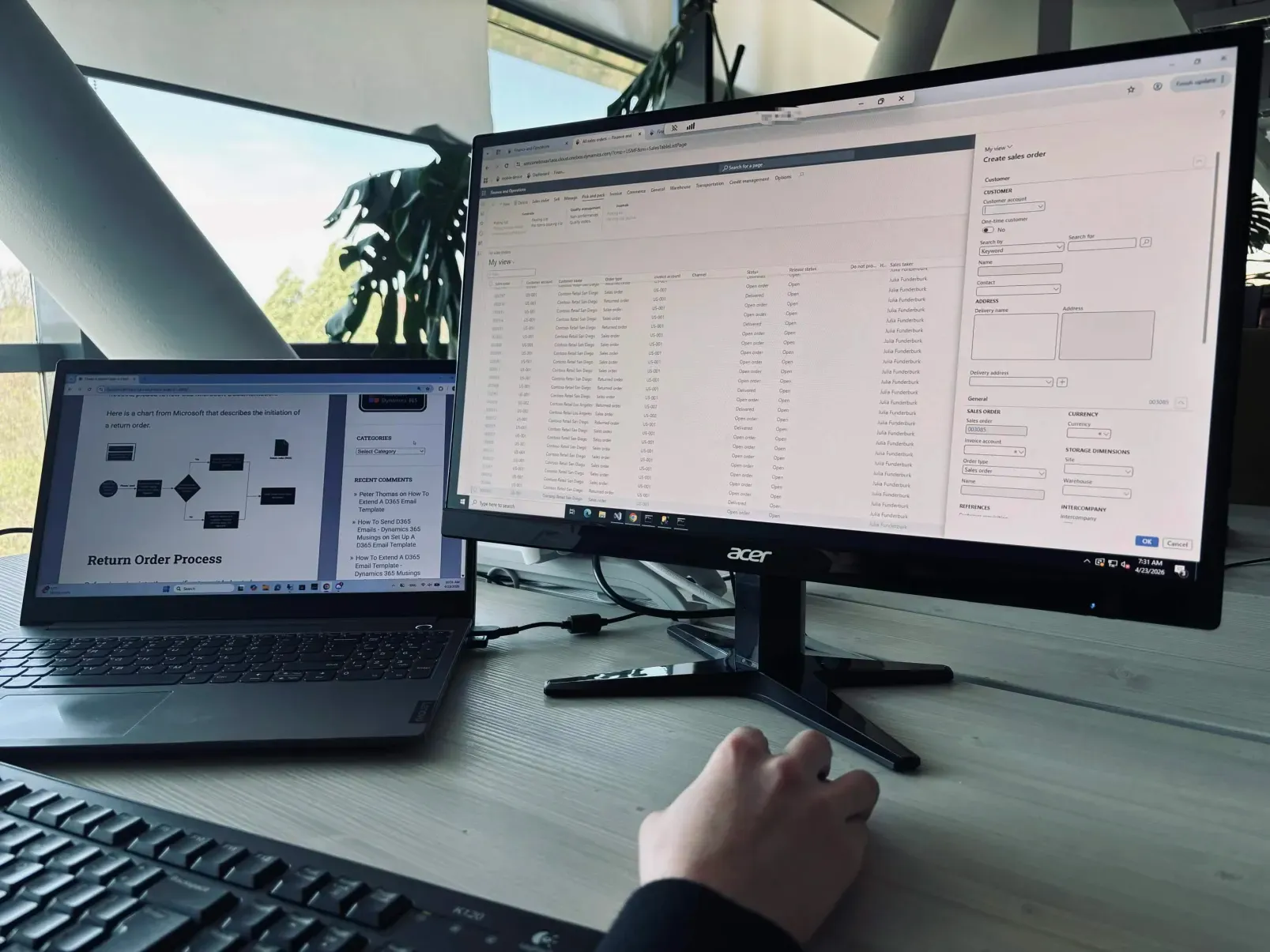
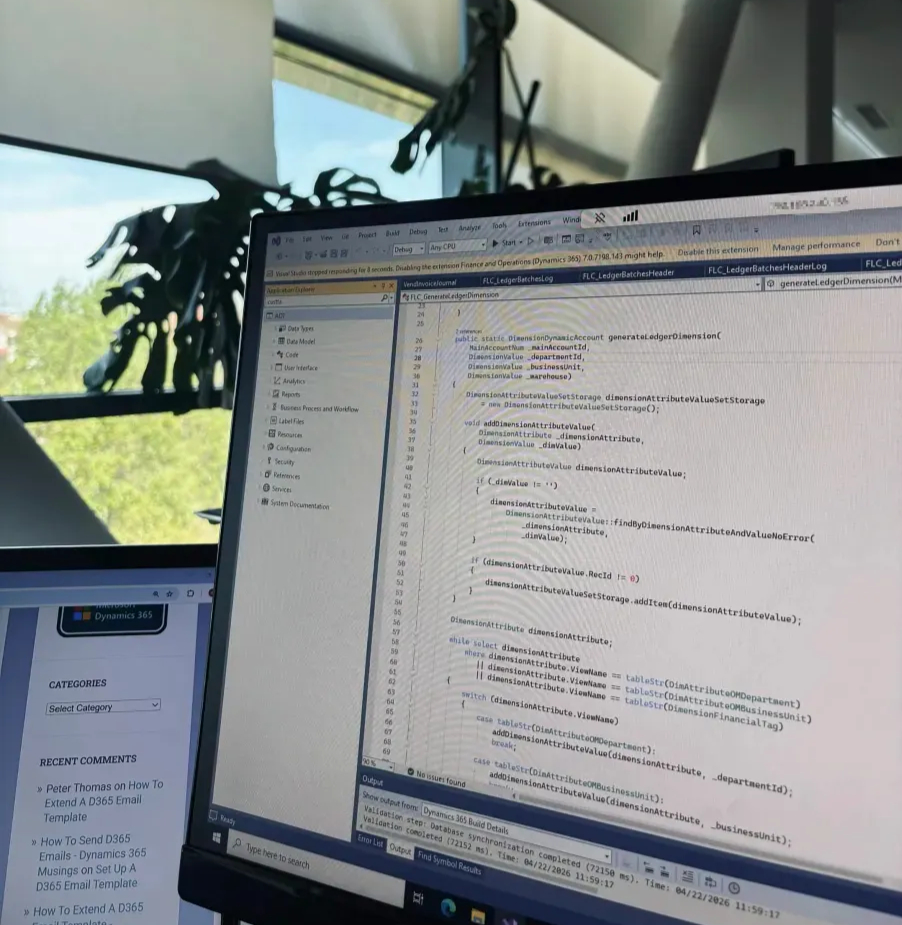


In university, programming often feels like a loop: write code, pass a test, get a grade, repeat. It’s a clean, theoretical exercise. That is, until you realize there are lines of code out there doing much more than printing console messages, they are managing global supply chains, allocating millions in budgets, and triggering physical assembly lines in real-time.
This is the gateway into the world of Enterprise Resource Planning (ERP).
For many of us, discovering Microsoft Dynamics 365 Finance & Operations doesn’t happen by browsing job boards. It hits you during a hands-on encounter, a student club dedicated to enterprise tech or a university project connected to a real environment. That’s when the shift happens. You tackle your first practical task, maybe just trying to add a custom field to CustTable (the customer master table), and you realize that X++ isn’t just another syntax to memorize. It is a tool for solving complex business reality.
But beyond the academic hype, what does it truly mean to start a career as a D365 F&O junior developer today, in 2026?