It’s already established that a modern senior developer does not only ask “How do we implement this?”, but “Should it be implemented at all?”. A person in this role is able to plan ahead and think about business impact, user value and long-term consequences. Great code is important, but great decisions matter more, the role shifting toward improving the decision process, not just the implementations. Reducing complexity is a core skill in a senior developer and, while junior developers are often capable of building complex systems, senior developers prove skill by making things simpler.
Also, it is said that AI changed the definition of technical value. If AI can generate code, senior developers are no longer valuable for producing code — they are valuable for judging it. AI tools can now suggest architectures, write tests, refactor code, but they cannot reliably evaluate trade-offs, and this is where a senior developer provides judgment based on experience, context, long-term thinking and risk awareness.
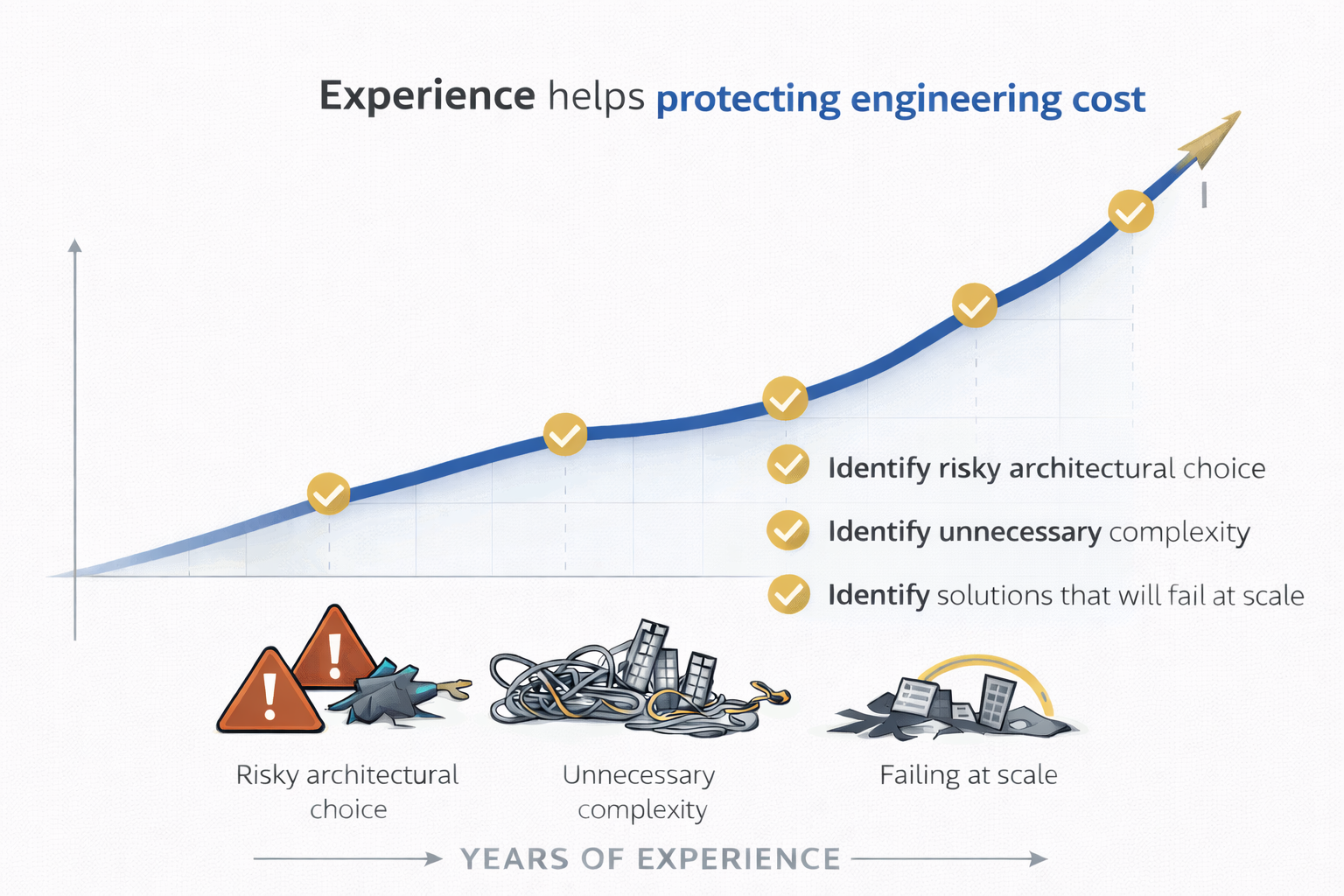
Years of experience matter less as a number and more as pattern recognition, meaning that senior developers are able to quickly identify risky architectural choices, unnecessary complexity and solutions that will fail at scale, because they've seen similar problems before and can avoid repeating past mistakes.
But good decisions alone are not enough. Senior developers must also help the team understand those decisions.