
Connected scales
Raspberry Pi bridges bring readings into the station app. The operator confirms the weight; the record keeps its source and time.
Custom software for the work behind every ring.
Piece-by-piece production. Gram-by-gram accountability. Orders, workshop operations and metal records, supported by a separate sales and stock application.

Material, size, finish, stones and engraving stay with each piece, from the order to the printed worksheet.
Connect weighing to the operation. Record scrap and keep separate customer balances for gold and silver.
Allocate depot stock to sales teams, record returns and issue invoices through the appropriate stock or production flow.
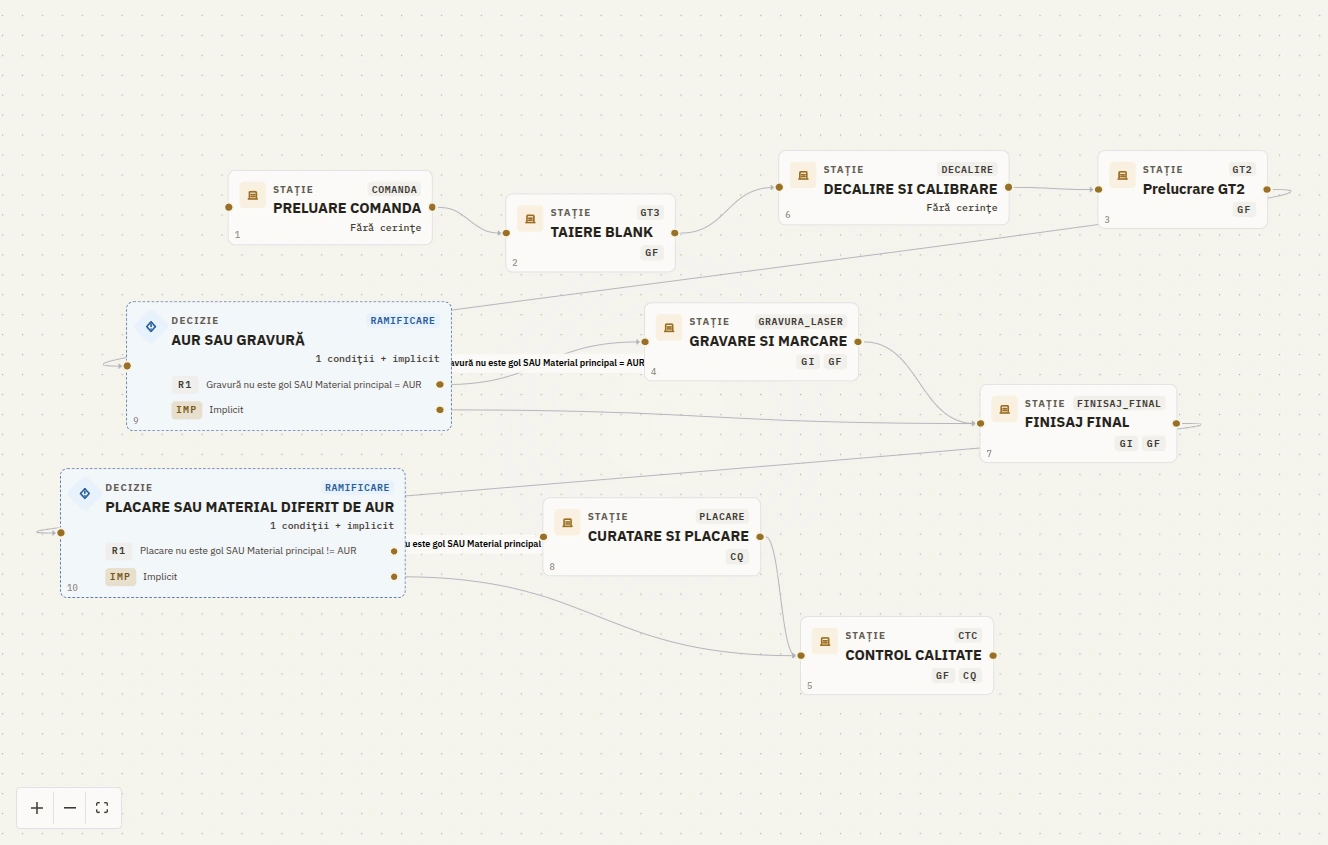
The workflow editor connects stations, conditions and quality checks. Routing follows the piece’s configuration; existing orders retain their published workflow when the process changes.
Workers scan a QR code or search for the order on a tablet. Each piece keeps its own specifications—even the two rings in a pair. Operations record who did the work, when, and the required measurements.
Trace a difference back to the work.
Scale readings, scrap collection and customer metal accounts are tied to recorded operations. The office can distinguish metal received, usable stock and finished weight delivered.
Raspberry Pi bridges bring readings into the station app. The operator confirms the weight; the record keeps its source and time.
Incoming and outgoing weights calculate scrap. Tray collection records the actual recovered weight and its difference from the calculated total.
Customer receipts save gross weight, usable net stock and loss together. Deliveries use actual finished weight, with links to production orders.
Compatible series pieces share one count check and, where required, a total weighing. Allocation preserves the batch total and each piece’s record.
A web application replaces Access workflows. Depot-to-team transfers record quantities, balances and operator. Blind departure/return counts support review. Finished goods enter stock through a manually confirmed receipt.
Stock sales consume allocations; production billing creates no warehouse movement. SmartBill handles invoice numbering. Labour is billable without adding metal weight; statements bring invoices and collections together.
Production uses the sales customer register through an API. Version checks protect edits, and replay protection prevents duplicate creation requests. Production keeps its own operation and metal records.
Tell us where orders, materials or handoffs become difficult to track.